Introduction
Digital transformation is no longer a trend reserved for large enterprises. Today, small and medium-sized enterprises (SMEs), particularly those in IT and professional services, are leveraging digital technologies to improve productivity, streamline operations, and deliver exceptional customer experiences.
Whether you run a software development company, IT consulting firm, digital agency, accounting practice, legal consultancy, or managed service provider, adopting a structured digital transformation strategy can help your business remain competitive in an increasingly digital marketplace.
However, digital transformation is about more than simply purchasing new software. It requires a clear roadmap that aligns technology with business goals, people, and processes.
This guide outlines a practical step-by-step digital transformation roadmap designed specifically for SMEs in IT and professional services.
What Is Digital Transformation?
Digital transformation is the process of integrating digital technologies into every aspect of a business to improve operations, enhance customer experiences, and create new opportunities for growth.
For SMEs, this may include:
- Migrating to cloud-based infrastructure
- Automating repetitive workflows
- Implementing CRM and ERP systems
- Enhancing cybersecurity
- Using data analytics for decision-making
- Leveraging artificial intelligence (AI)
- Improving collaboration through digital tools
The objective is to build a more agile, efficient, and customer-focused organization.
Transform Your SME with a Strategic Digital Transformation Roadmap
As small and medium-sized businesses adapt to changing customer expectations and increasing market competition, they need a structured approach to modernize their operations. Our Digital Transformation Services help businesses develop a comprehensive transformation roadmap by integrating cloud technologies, process automation, AI-driven solutions, and scalable digital platforms that improve operational efficiency and support sustainable business growth.
Why Digital Transformation Matters for SMEs
Many SMEs still rely on manual processes, spreadsheets, or disconnected systems. These practices often result in inefficiencies, delays, and limited scalability.
A successful digital transformation can help businesses:
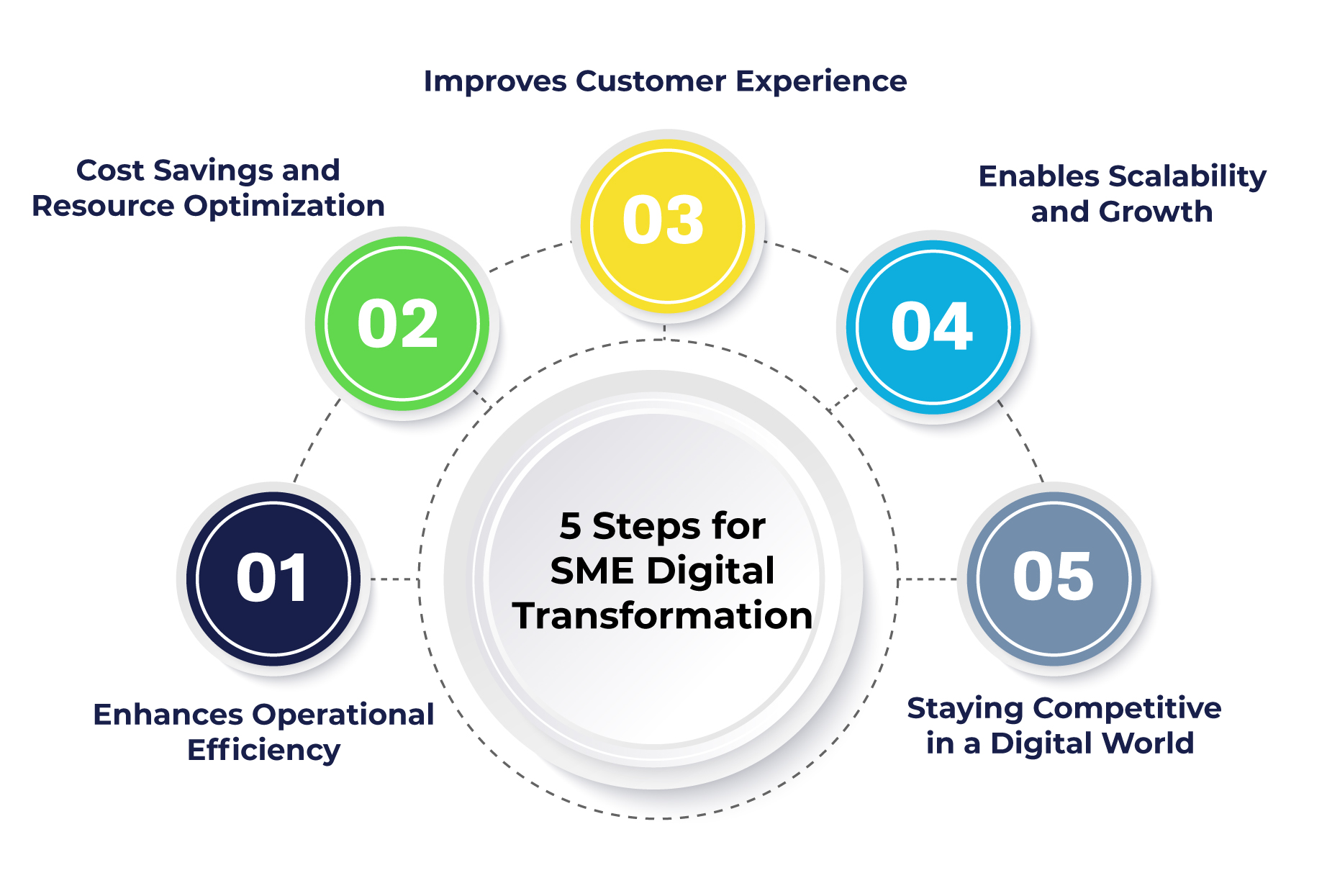
- Improve operational efficiency
- Reduce operational costs
- Increase employee productivity
- Deliver better customer experiences
- Enable remote and hybrid work
- Strengthen data security
- Make data-driven decisions
- Scale operations more effectively
- Stay ahead of competitors
By adopting modern technologies strategically, SMEs can compete with larger organizations while remaining agile.
Step 1: Assess Your Current Business Processes
The first step is understanding where your business stands today.
Conduct a detailed assessment of:
- Existing software and tools
- Manual workflows
- Customer journey
- Team collaboration methods
- IT infrastructure
- Security practices
- Data management processes
Identify bottlenecks, repetitive tasks, and areas where digital solutions can deliver measurable improvements.
Step 2: Define Clear Business Goals
Technology should support business objectives—not replace them.
Examples of digital transformation goals include:
- Reducing project delivery time
- Improving customer satisfaction
- Increasing recurring revenue
- Automating internal approvals
- Enhancing employee productivity
- Reducing operational expenses
- Strengthening cybersecurity
- Improving reporting accuracy
Set measurable Key Performance Indicators (KPIs) to track progress.
Step 3: Create a Digital Transformation Strategy
A well-defined strategy ensures that every technology investment contributes to business growth.
Your roadmap should include:
- Business priorities
- Technology requirements
- Budget allocation
- Timeline
- Team responsibilities
- Risk management
- Expected outcomes
Rather than implementing multiple tools at once, prioritize initiatives that deliver the highest business value.
Step 4: Move to the Cloud
Cloud computing forms the foundation of modern digital transformation.
Cloud platforms enable SMEs to:
- Reduce infrastructure costs
- Scale resources on demand
- Access systems remotely
- Improve collaboration
- Increase system reliability
- Simplify data backup and recovery
Cloud-based applications also reduce the burden of maintaining on-premises servers, allowing IT teams to focus on innovation.
Step 5: Automate Routine Business Processes
Automation helps eliminate repetitive tasks, reduce errors, and improve efficiency.
Examples include:
- Invoice generation
- Employee onboarding
- Customer support ticket routing
- Appointment scheduling
- Payroll processing
- Document approvals
- Email marketing campaigns
Automation frees employees to focus on higher-value activities such as customer service, consulting, and innovation.
Step 6: Improve Customer Relationship Management
Customer experience is a key competitive differentiator.
Implementing a CRM system helps SMEs:
- Manage customer interactions
- Track sales opportunities
- Organize contacts
- Automate follow-ups
- Analyze customer behaviour
- Improve lead conversion
A centralized customer database enables teams to deliver personalized and timely service.
Step 7: Strengthen Cybersecurity
As businesses become more digital, cybersecurity becomes increasingly important.
Essential measures include:
- Multi-factor authentication (MFA)
- Data encryption
- Regular software updates
- Secure backups
- Endpoint protection
- Employee security training
- Role-based access controls
Protecting sensitive client and business data builds trust and reduces operational risks.
Step 8: Use Data Analytics for Better Decisions
Data is one of the most valuable business assets.
Analytics tools can help SMEs:
- Monitor business performance
- Track customer engagement
- Measure project profitability
- Forecast demand
- Identify operational bottlenecks
- Improve resource planning
Real-time dashboards empower leaders to make informed decisions quickly.
Step 9: Enable Collaboration and Remote Work
Modern collaboration tools improve communication and productivity.
Digital collaboration solutions support:
- Video conferencing
- Instant messaging
- File sharing
- Project management
- Document collaboration
- Task tracking
These capabilities are especially valuable for distributed teams and client-facing service organizations.
Step 10: Invest in Employee Training
Technology adoption is successful only when employees know how to use new systems effectively.
Training should focus on:
- New software platforms
- Cybersecurity awareness
- Digital collaboration tools
- Process automation
- Data management
- AI-assisted productivity tools
Encourage continuous learning to ensure teams stay current with evolving technologies.
Step 11: Adopt Artificial Intelligence Where It Adds Value
AI can enhance productivity without replacing human expertise.
Practical applications include:
- AI chatbots for customer support
- Intelligent document processing
- Meeting summaries
- Predictive analytics
- Automated content generation
- Code assistance for developers
- Workflow optimization
Start with small, high-impact use cases and expand as your organization gains confidence.
Step 12: Monitor, Measure, and Improve
Digital transformation is an ongoing journey.
Track metrics such as:
- Customer satisfaction scores
- Project completion time
- Revenue growth
- Operational costs
- Employee productivity
- System uptime
- Lead conversion rates
Review these metrics regularly and refine your roadmap based on business needs and feedback.
Grow Your Digital Presence After Transformation
As businesses complete their digital transformation journey, they need effective marketing strategies to attract customers, increase brand visibility, and generate qualified leads. Our Digital Marketing Services help businesses strengthen their online presence through SEO, content marketing, performance campaigns, and data-driven digital strategies that support long-term business growth and measurable result
Common Challenges SMEs Face
While the benefits are significant, SMEs may encounter obstacles such as:
- Limited budgets
- Resistance to change
- Legacy systems
- Skills shortages
- Data migration complexities
- Cybersecurity concerns
- Integration issues
Addressing these challenges with careful planning and phased implementation helps minimize disruption.
Best Practices for a Successful Digital Transformation
To maximize success:
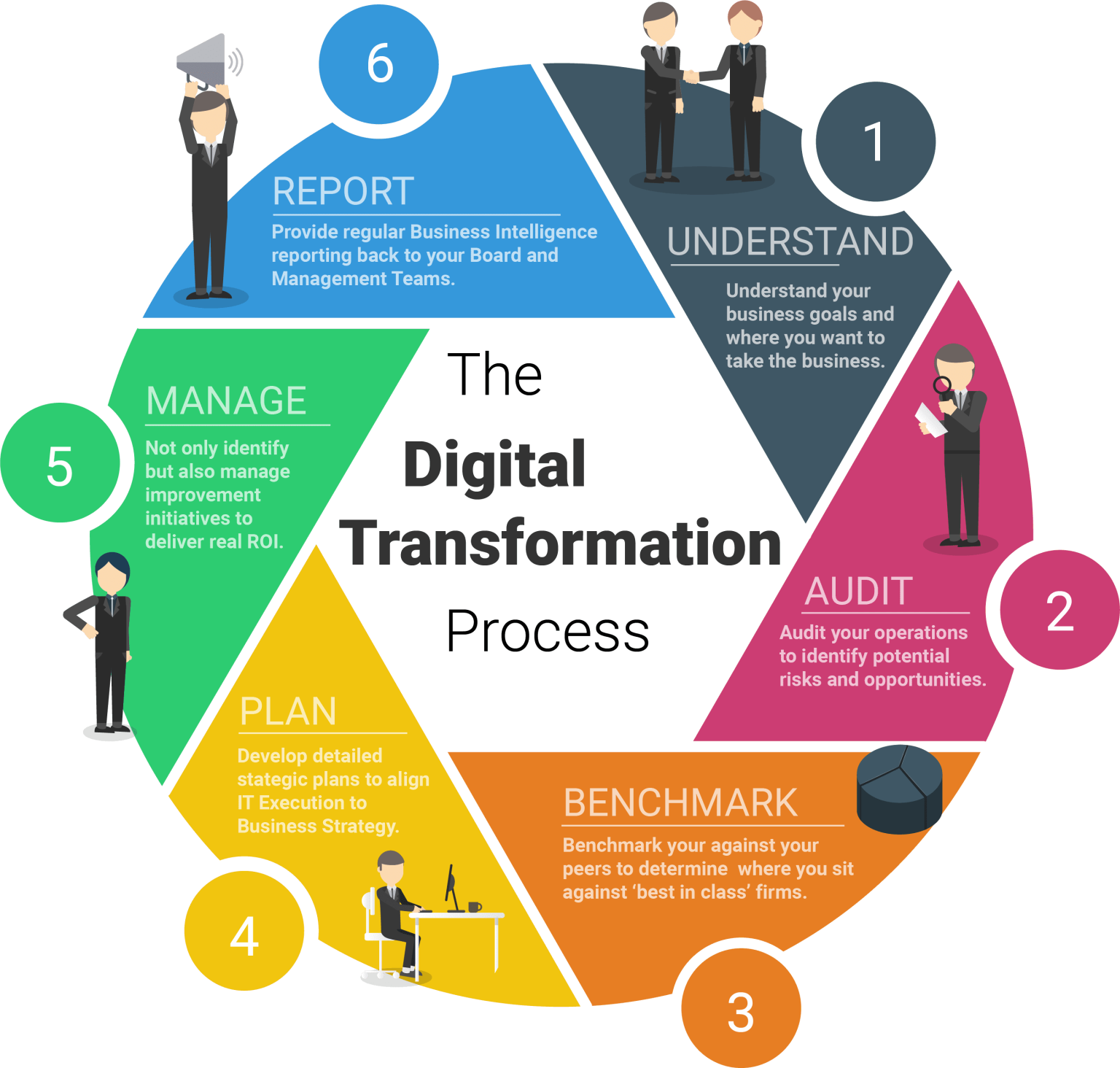
- Start with clear business objectives.
- Prioritize projects with measurable ROI.
- Choose scalable technology solutions.
- Involve employees early in the process.
- Focus on customer experience.
- Ensure strong cybersecurity practices.
- Monitor performance continuously.
- Update your roadmap as your business evolves.
A phased approach often delivers better results than attempting a complete transformation at once.
Benefits of a Digital Transformation Roadmap
Following a structured roadmap enables SMEs to:
- Increase operational efficiency
- Improve customer satisfaction
- Reduce manual work
- Enhance collaboration
- Accelerate project delivery
- Improve business agility
- Strengthen security
- Support business growth
- Gain actionable business insights
- Build a competitive advantage
These benefits help IT and professional services firms remain resilient in a rapidly changing business environment.
Conclusion
Digital transformation is no longer optional for SMEs in IT and professional services. Customers expect faster service, seamless digital experiences, and secure interactions, while employees benefit from modern tools that simplify collaboration and increase productivity.
By following a structured roadmap—starting with process assessment, defining clear goals, embracing cloud technologies, automating workflows, strengthening cybersecurity, leveraging analytics, and continuously improving—SMEs can modernize their operations and position themselves for long-term success.
Rather than viewing digital transformation as a one-time project, businesses should treat it as an ongoing strategy that evolves with technology, customer expectations, and market demands. Organizations that embrace continuous innovation today will be better equipped to adapt, grow, and thrive in the future.
Frequently Asked Questions (FAQs)
1. What is a digital transformation roadmap?
A digital transformation roadmap is a strategic plan that outlines the steps, technologies, timelines, and goals required to modernize business operations through digital solutions.
2. Why is digital transformation important for SMEs?
It helps SMEs improve efficiency, reduce costs, enhance customer experiences, strengthen security, and scale operations more effectively.
3. Which technologies are essential for digital transformation?
Key technologies include cloud computing, CRM systems, workflow automation, cybersecurity tools, AI solutions, collaboration platforms, and data analytics.
4. How long does digital transformation take?
The timeline varies depending on business size and complexity. Many SMEs adopt a phased approach, implementing changes over several months or longer.
5. How can SMEs ensure a successful digital transformation?
Success depends on setting clear goals, involving employees, selecting scalable technologies, measuring results, and continuously refining the strategy based on business needs.